Loading...
Jo Marchant
@jo-marchant
Jo Marchant is a New York Times bestselling author and journalist whose work explores humanity's connection to the cosmos, history, and the mind-body relationship. Her books include In Search of Now, The Human Cosmos, Cure, The Shadow King, and Decoding the Heavens, each examining different facets of human experience and scientific discovery. She regularly contributes journalism on topics ranging from ancient civilizations to neuroscience, hosts a science podcast, and speaks internationally at prestigious venues including the Royal Institution, Hay Festival, and World Science Festival.
Member since March 20261 lab
jomarchant.comMy Experience
Loading map...
Resources (15)
Notes & Advice
Persistence & Patience
My journey, I think, like a lot of people, has been one where I didn't know where I was going until I got there. I have always been fascinated by science and by that curiosity. I was so excited by that idea. I started from a place of I am fascinated by science and what we are discovering about the world, and there's lots of different things that I want to tell people about. But the more that I've gone through my career, I've realized one thing. I think that science doesn't always get right, and I think that modern society doesn't always get right, is this split between mind and body.
Notes & Advice
Find Your Cosmic Origins
So I think my purpose has become, in different ways, writing about the mind-body link and health. I've written about our relationship with the stars. At the moment, I'm writing about the nature of the present moment. And I think what ties all of those together is how we can bring mind and body together and understand that our nature is this beautiful interconnected system. We are more than just bodies, and we are connected to the rest of life, I think, in quite a spiritual way. And if we treat nature as just a physical resource to exploit and we're not in tune with those more emotional and spiritual connections, then I think disaster lies that way as well.
Notes & Advice
Self-Reflection
I've also studied a lot of martial arts in my life. I used to teach jiu-jitsu a long time ago, and I think maybe being exposed to that eastern philosophy was perhaps an early realization that there are different ways of thinking about the world. I realized that a lot of the things I was interested in, so the placebo effect, hypnosis, I did a feature article on mindfulness meditation and its use for treating depression and anxiety. I was like, wait, all of these have this theme of, they're all to do with the mind. Yeah, and then everything I've written since, whether I was looking at our relationship with the stars or the present moment, always seems to come back to that. What is reality? What is our relationship with each other and with our surroundings? I suppose that's given me the quest that I'm still on.
Notes & Advice
Take Action
If you start small and just think, where can I help? What can I do? It doesn't have to be an immediate mission straight away, but just those small little actions of focusing away from yourself, looking at where you can actually help someone else, give something to an interaction. I think the mission and the purpose will follow from there. To build social connections, you have to stop thinking about what you're going to get from a social interaction and start thinking about what you can give to that interaction.
Notes & Advice
Community & Connection
If it's okay, I would just like to mention that there is quite a lot of research on the importance of meaning and purpose in physical health. One of the biggest causes of disease and disability throughout our lives, as all of us know, is chronic stress. All of the fight or flight responses being switched on all the time cause wear and tear on our tissues and are linked with pretty much every chronic disease that you care to name. Having meaning and having purpose is one of those things that pops up again and again as what scientists call a biological shield. There are different biological shields. Social connection is a really important biological shield, but meaning is also really important. That's been shown all the way down to levels of gene expression in people's white blood cells, to the cells of their immune system actually being pushed away from inflammation and towards anti-tumor and antiviral responses in people who have a greater meaning, a greater purpose.
Notes & Advice
Higher Education
She has a background in genetics and medical microbiology, which has led her to write books that really focus on the frontier of the mind-body connection and also our connection with the cosmos. I still feel that the scientific method is important. We need to test our treatments, but we need to have a more open-minded idea of what we are going to be able to study in science, and that is really happening now. I think that science doesn't always get right, but I started from a place of I am fascinated by science and what we are discovering about the world.
Notes & Advice
Healing Modalities
Hypnosis - one of the mind-body modalities Jo investigated as a doorway to fundamental understanding

Article
Placebo Effect
Placebos have been used in medicine since antiquity and may have been significant in improving health and quality of life when little was known about the etiology of most illnesses. Most outcomes were likely due to a placebo effect since the available treatments were unproven or have since been proven invalid. For example, snake oil and bloodletting was a common practice in the past; however, those who responded positively to those treatments likely did so because of a placebo effect. The emergence of placebo-controlled clinical trials in the 1940s reintroduced the placebo effect to the modern day. The classic article "The Powerful Placebo" by Henry Beecher highlighted the placebo effect and emphasized a need to account for it to evaluate the efficacy of a treatment modality properly. Both research and clinical settings utilize the placebo effect.[1][2]
Notes & Advice
Healing Modalities
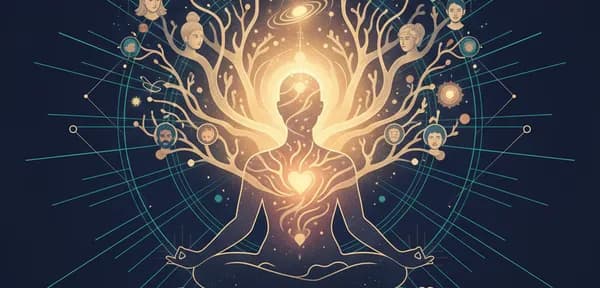
I realized that a lot of the things I was interested in, so the placebo effect, hypnosis, I did a feature article on mindfulness meditation and its use for treating depression and anxiety. I was like, wait, all of these have this theme of, they're all to do with the mind and its effect on our physical health. So that's what kind of got me into that book and realizing the deep connections between mind and body that I think conventional science and medicine has often ignored. I still feel that the scientific method is important. We need to test our treatments, but we need to have a more open-minded idea of what we are going to be able to study in science, and that is really happening now. There are just fascinating techniques for doing that.


Notes & Advice
Use Your Gifts
What is my purpose? That's a really interesting question. I see it as lots of different layers. Actually, I don't know if I would say there's one thing. One purpose that I have is to tell stories. I am a journalist, and I'm privileged enough to be able to travel, to see incredible things, to talk to some of the most amazing and inspirational people on the planet, and I want to share that. I want to pull together what different people are doing and tell people about what I've discovered. So, that's kind of one layer of my purpose. But in terms of that message that I then want to convey to people, the biggest thing, and it's taken a while to evolve actually, because I started from a place of I am fascinated by science and what we are discovering about the world, and there's lots of different things that I want to tell people about.
Notes & Advice
Listen To Your Body
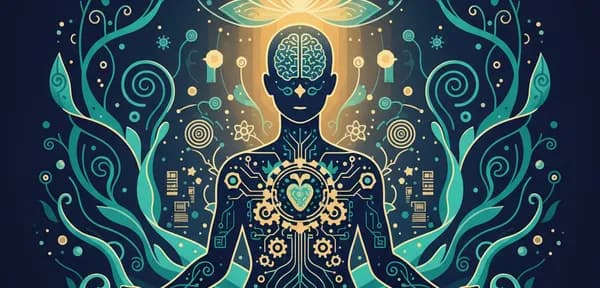
I think that science doesn't always get right, and I think that modern society doesn't always get right, is this split between mind and body, objective and subjective, the physical world and the mental world. Scientists will often say that only the physical world exists, to the point that they would even say that mind and consciousness is an illusion. But then often you've got people on the other side saying, 'Oh, no, the physical world doesn't exist. It's all just the mind. We can just imagine, believe, whatever we want.' I truly believe that to really understand our nature and to move forwards in a positive way, we have to realize that these two things are fundamentally connected. We are bodies and we are minds. It's just looking at this, you know, looking at ourselves from different perspectives. We need to have a way of looking at the world and interacting with nature that acknowledges the physical world matters. But on the other hand, we are more than just bodies, and we are connected to the rest of life, I think, in quite a spiritual way.
Notes & Advice
Stay Curious & Open
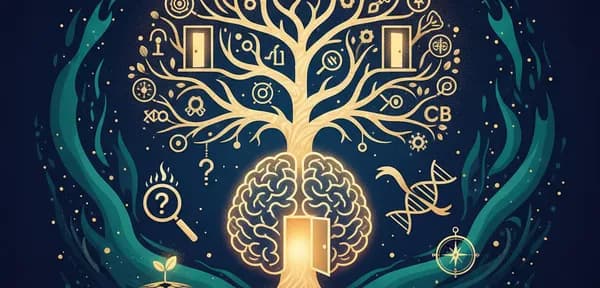
My journey, I think probably like a lot of people, has been one where I didn't know where I was going until I got there. I've always been fascinated by science and that curiosity, that wanting to find out about nature, not taking anyone's word for it, not reading it in a book, just going and trying something out and seeing what happens. I was so excited by that idea as a child and as a student. I've always been drawn as well to things in science that don't make sense, those little things that everyone tends to dismiss because they don't really understand them, like the placebo effect, for example. For me, I'm like, well, that's really interesting. Why does that work? When does that work? Does that work for everything? Or hypnosis is another one of those things that some people are like, well, it's a bit quirky. We don't really understand what's going on. For me, I was like, I think that when something doesn't make sense, it's a sign that we might have got something quite fundamentally wrong in how we're understanding the world. There are these doorways into something that could be so much more fundamental.
Notes & Advice
Focus On Something Bigger Than Yourself
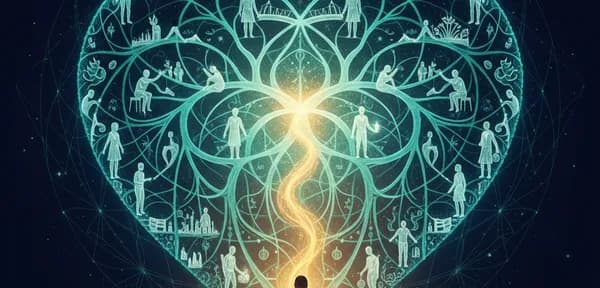
If someone is feeling a bit lost and they don't feel like they have a purpose, the main thing I would say is stop looking for it inside yourself. The absolute key that we see in all of the research is when you shift your focus away from yourself. It's not about you, it's about other people. What can you do to help? We see this in social connection in the research as well. To build social connections, you have to stop thinking about what you're going to get from a social interaction and start thinking about what you can give to that interaction. If you start small and just think, where can I help? What can I do? It doesn't have to be an immediate mission straight away, but just those small little actions of focusing away from yourself, looking at where you can actually help someone else, give something to an interaction. I think the mission and the purpose will follow from there. The rationale behind that is similar to what I was saying before. If you're focused on a greater mission, a greater purpose, it's something that is beyond you, so you're not focused on your own physical well-being. You don't have that stress. You're focused beyond yourself. That personal selfish stress melts away and you're passionate about this bigger picture. It's something that will live on beyond you, that is important regardless of the small things that happen to you, and that seems to be very powerful in terms of people's physical and emotional health.
